
Negotiations are inherently social and emotional processes, requiring parties to manage complex dynamics, cultural contexts, and relational concerns while pursuing economic outcomes (Côté, 2014; Craver, 2013). Accordingly, emotional intelligence (EI) has been associated with relationship satisfaction (Kong et al., 2016), constructive conflict management (Grubb et al., 2017), and rapport and negotiation outcomes (Kim et al., 2014). EI, the capacity to recognize, understand, regulate, and strategically use emotions, has emerged as a critical topic in negotiation research (Goleman, 1995; Mayer et al., 2008).
Despite the conceptual appeal of EI in negotiation, empirical findings remain inconclusive. Some studies report positive associations between EI and relational outcomes such as negotiation satisfaction and relationship quality, as well as context-dependent associations with economic outcomes (Sharma et al., 2013; Kong et al., 2016). Others highlight ambiguous or even negative effects on individual economic outcomes, suggesting that high EI may lead to empathy-based concessions or emotional overinvestment, potentially reducing distributive gains (Galinsky et al., 2008; Foo et al., 2004). This mixed evidence raises the question of the exact nature of the relationship between EI and negotiation outcomes.
Moreover, the field lacks consensus on how to conceptualize and measure EI in negotiation research. From a measurement perspective, three approaches can be distinguished: self-report scales (e.g., Petrides & Furnham, 2001), performance-based ability tests (e.g., the MSCEIT; Mayer et al., 1999), and observer or proxy measures such as empathy and emotional regulation (O’Connor et al., 2019). These measurement types are more accessible as a starting point than the theoretical models that underlie them. Theoretically, ability-based models (Mayer-Salovey-Caruso) and trait or mixed models (Goleman) differ in whether EI is conceptualized as a cognitive ability or a personality-like disposition. This conceptual and methodological diversity complicates cross-study comparisons and limits theoretical integration. It is also worth noting that studies relying on self-report measures for both EI and negotiation outcomes may be susceptible to common method bias, a potential artifact that should be considered when interpreting associations between self-report EI and relational outcomes.
To address these challenges, this paper systematically reviews and quantitatively synthesizes the empirical literature on emotional intelligence in negotiation. Drawing on 105 empirical studies available up to June 2025, we conducted a systematic literature review guided by PRISMA to assess the extent to which EI is associated with negotiation outcomes, including both economic and relational dimensions. We further conducted a meta-analysis based on 38 empirical articles providing 160 effect sizes to evaluate the overall effect size of EI on negotiation outcomes and to explore potential moderators explaining heterogeneity across findings; after excluding one study that did not employ a validated EI instrument (Artinger et al., 2014; 5 effect sizes), the final analytic sample comprised 37 studies and 155 effect sizes.
Rather than presuming a uniformly positive effect, we critically assess under what conditions, and to what extent, EI influences negotiation performance. By providing a comprehensive, structured analysis of the existing evidence, this study advances theoretical understanding of EI in negotiations and informs practice by clarifying when and how EI contributes to negotiation outcomes. The findings generate implications for negotiation training, selection, and future research, contributing to a more nuanced and evidence-based perspective on emotional intelligence in the negotiation context.
Methodology
Definition and Conceptualization of EI
Emotional intelligence is conceptualized in this review as a dynamic, trainable capacity (Joseph & Newman, 2010) while also acknowledging its trait-like components (Goleman, 1995). EI encompasses self-awareness, self-regulation, empathy, social skills, and emotional reasoning, with each component playing a distinct role in complex interpersonal settings such as negotiations. Across studies, EI has been measured using various instruments, including performance-based tests like the MSCEIT, self-report scales such as the EQ-I, and behavioral proxies such as observed emotional displays during negotiation tasks. This methodological heterogeneity represents a key source of variance in reported outcomes across the empirical literature.
Literature Search and Screening Procedure
This review followed a systematic approach guided by the PRISMA 2020 framework (Page et al., 2021) to ensure methodological transparency and replicability. The central research question driving this review is: To what extent, and under which conditions, does emotional intelligence correlate with negotiation outcomes across economic and relational dimensions?
To address this question, a comprehensive literature search was conducted across three databases: Scopus, Business Source Ultimate (BSU), and Google Scholar. The final search string was formulated to capture relevant studies by combining negotiation-related terms with emotional intelligence constructs:
(negot OR conflict resolution) AND (emotional intelligence OR empathy OR self-awareness OR self-regulation OR emotions).
In Scopus and BSU, field filters were applied to search within titles, abstracts, and author-supplied keywords. In Google Scholar, tailored queries using the allintitle: function were constructed manually, reflecting a technical limitation of this database, which does not support field-restricted searches across titles, abstracts, and keywords simultaneously. To compensate, the keyword set was broadened for Google Scholar queries to maximize recall within this constraint. The search covered all publications available up to June 2025.
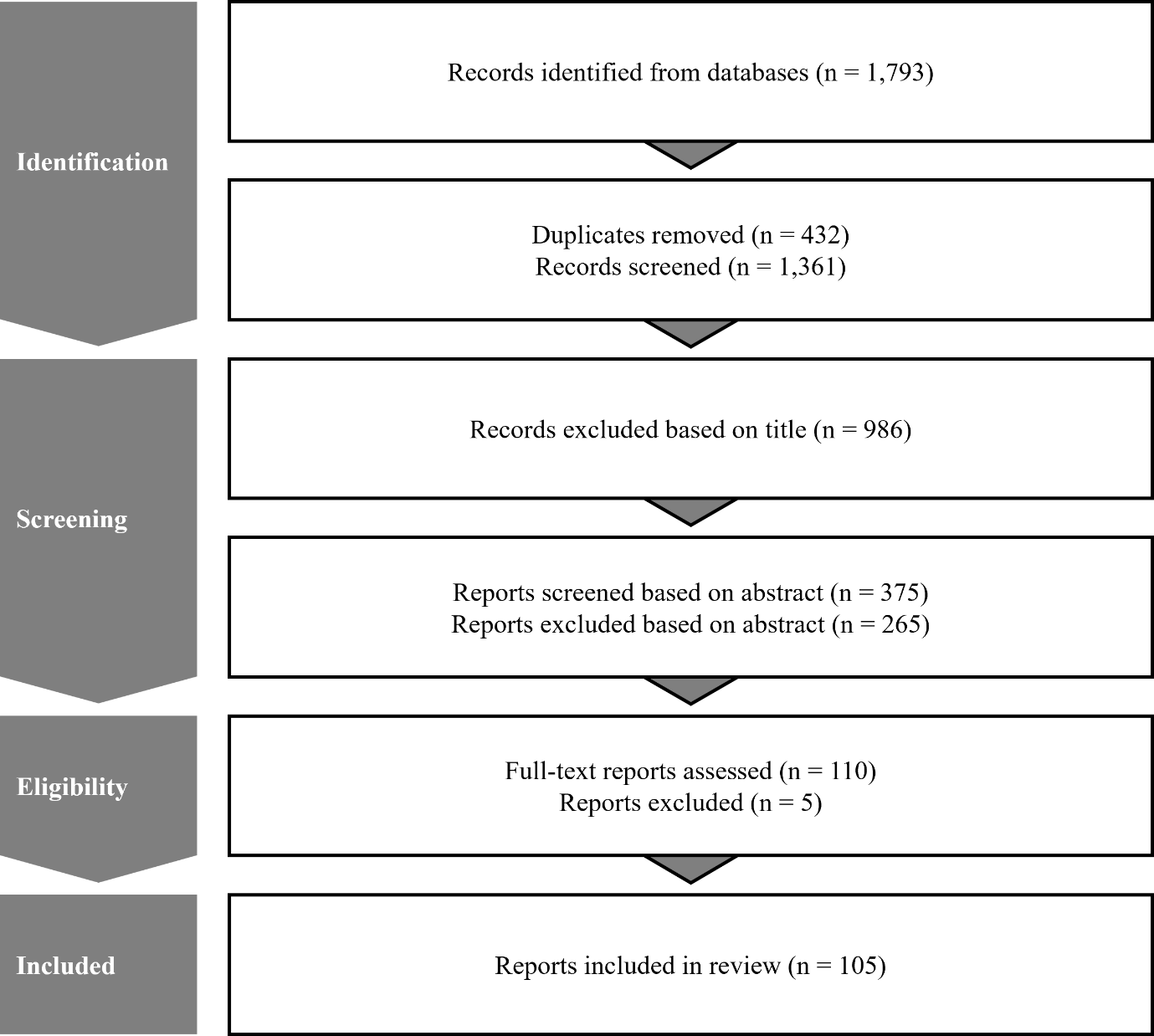
A two-step deduplication process was conducted. First, exact duplicates were identified and removed in Excel based on title and author metadata, prioritizing Scopus and BSU entries over Google Scholar versions due to more complete bibliographic data. In a second step, remaining potential duplicates were screened using the built-in deduplication function in Rayyan, allowing for the detection of near-duplicates based on fuzzy matching. Across both steps, a total of 432 duplicates were removed, resulting in 1,361 unique records for screening.
After deduplication, the remaining 1,361 records were directly screened in Rayyan. A first-level screening was conducted at the title level using predefined inclusion and exclusion criteria, serving to efficiently exclude records whose titles clearly indicated irrelevance (e.g., studies from unrelated domains such as medicine, engineering, or education). This step is consistent with PRISMA 2020 guidelines, which permit title-only screening at the first stage when titles are sufficiently informative to identify clearly ineligible records (Page et al., 2021). Studies were included if they (1) reported empirical findings, (2) addressed emotional intelligence or its subdimensions (e.g., empathy, self-awareness), and (3) investigated negotiation or conflict resolution. Exclusion criteria filtered out theoretical papers, studies from unrelated domains (e.g., medicine, engineering), and any remaining duplicates.
After title screening, 375 records remained. Abstract screening, based on the same criteria, yielded 110 studies for full-text review. During this final step, 5 studies were excluded due to irrelevance upon closer inspection. Ultimately, 105 empirical studies were included in the final analysis. A detailed summary of the selection process is shown in the PRISMA flow diagram (Figure 1).
To ensure transparency and traceability between the literature review and the meta-analysis, all studies that passed the full-text screening were assigned a unique Study ID. These IDs are used consistently throughout the paper to reference specific studies in both the descriptive synthesis and the meta-analytic results. The Study IDs are numbered consecutively up to 105. A complete overview of all studies, their Study ID, and their inclusion in the literature review and/or the meta-analysis is provided in Appendix 1.
Figure 1 PRISMA flow diagram
Meta-Analytic Procedure
Building on the conducted systematic literature review, a meta-analysis was performed to quantitatively synthesize empirical evidence on the relationship between emotional intelligence (EI) and negotiation outcomes. The objective of the meta-analysis was to assess the overall effect size of EI on negotiation outcomes while accounting for potential heterogeneity across studies and to examine moderators that might explain variations in effect sizes.
From the 105 articles identified in the systematic literature review, 38 empirical articles met the inclusion criteria for the meta-analysis. These articles often reported more than one relevant result, for example by assessing both relational and economic outcomes, using different EI measures, or conducting separate study samples within the same publication. In total, this yielded 160 effect sizes, which were coded as independent inputs for the quantitative synthesis. Of these 38 articles, one (Artinger et al., 2014) was subsequently excluded from all quantitative analyses because it did not employ a validated EI instrument. This study contributed 5 effect sizes; its removal reduced the analytic sample to 37 studies providing 155 effect sizes, which forms the basis for all results reported below. Following best practices in meta-analysis (Borenstein et al., 2009), effect sizes were analyzed using a random-effects model to allow for heterogeneity across studies. While multiple effect sizes from the same article are not fully independent, the random-effects approach mitigates these dependencies; robustness checks with moderator analyses further addressed potential clustering.
For each included effect size, data on sample size, effect size, type of EI measure used (ability, trait, mixed), type of negotiation outcome assessed (economic, relational, behavioral), and study context (e.g., dyadic negotiation, group negotiation, training-based settings) were extracted. Effect sizes reported in different formats were converted to r using established formulas (Borenstein et al., 2009) to ensure comparability across studies. All r values were then Fisher Z-transformed to stabilize variance, with variance computed using the formula 1/(N-3).
A random-effects meta-analysis using restricted maximum likelihood estimation (REML) was conducted with the metafor package in R (Viechtbauer, 2010), which accounts for the possibility that true effect sizes may vary across studies due to methodological and contextual differences. To assess heterogeneity, we examined the Q-statistic (Cochran, 1954; Borenstein et al., 2009), I², and τ². The Q-statistic tests whether observed variance in effect sizes exceeds what would be expected from sampling error alone; a significant Q indicates true heterogeneity and justifies moderator analyses. Higher values of I² indicate a greater proportion of variance attributable to true between-study differences rather than chance. Specifically, we examined the type of EI measure, the type of negotiation outcome assessed, and the negotiation setting (dyadic vs. multiparty) as potential moderators. Experimental studies involving student samples were retained in the analysis because controlled experimental designs, which allow causal inference about EI effects, are difficult to implement in professional field settings; the use of student samples is standard practice in this literature and study design was coded as a covariate. Study quality was not used as an exclusion criterion; instead, methodological variation across studies is captured through the heterogeneity statistics and moderator analyses.
Model
While prior research has highlighted the relevance of emotional intelligence (EI) in negotiation (Elfenbein et al., 2007; Foo et al., 2004), existing conceptualizations often treat EI as a unitary construct and assume a uniformly positive influence on negotiation outcomes. However, the empirical record paints a more complex picture, with studies reporting not only positive but also negative or ambiguous effects of EI in negotiation contexts (Galinsky et al., 2008; Olekalns & Smith, 2009). To address this theoretical gap, we propose an integrative conceptual model that delineates how EI is developed, which components are most relevant in negotiations, and how its effects depend on both contextual and measurement-related factors (see Figure 2).
Rather than conceptualizing EI as a single global trait, we distinguish five core components that are particularly salient in negotiation settings: self-awareness, self-regulation, empathy, social skills, and emotional reasoning (Goleman, 1995; Mayer & Salovey, 1997). This modular view builds on established models while emphasizing their distinct roles in complex interpersonal dynamics. For instance, self-awareness enables negotiators to monitor their emotional states and adjust their behavior; accordingly, empathy supports perspective-taking and the interpretation of others’ emotional signals (Galinsky et al., 2008); emotional reasoning allows negotiators to evaluate emotional cues in light of strategic goals (Schlegl et al., 2018). By treating these dimensions as analytically distinct, our model allows for a more precise understanding of how EI contributes to negotiation behavior.
Importantly, the influence of EI on negotiation outcomes is not uniformly beneficial. We differentiate between three categories of outcomes: (1) positive relational effects, such as rapport, relationship satisfaction, and negotiation effectiveness (Elfenbein et al., 2007; Kim et al., 2014; Kong et al., 2016); (2) negative effects, including emotional manipulation or escalation (Galinsky et al., 2008; Olekalns & Smith 2009); and (3) contingent effects, which vary depending on situational or methodological factors (e.g., empathy fostering cooperation in dyadic settings but reducing assertiveness in competitive groups; Fulmer & Barry, 2004; Kopelman et al., 2006). For example, empathy may foster cooperation in dyadic negotiations but reduce assertiveness in competitive group settings (Fulmer & Barry, 2004), while strong self-regulation may enhance composure yet inhibit authentic emotional expression when contextually inappropriate (Ye et al., 2023). Our framework emphasizes that while positive outcomes are robustly associated with EI across contexts, negative and contingent outcomes typically depend on situational and methodological factors.
To account for these variations, our model incorporates two empirically supported moderators. First, the negotiation structure (dyadic vs. multiparty) significantly shapes the effectiveness of EI: dyadic negotiation settings tend to strengthen the positive effects of EI, whereas group and role-play settings can reduce or even reverse these effects. Second, the type of EI measurement (trait-based vs. ability-based) was found to moderate the observed relationship between EI and negotiation outcomes, highlighting that methodological choices in operationalizing EI also influence effect size and interpretation. Together, these moderators help explain heterogeneity in the empirical literature and underline the importance of considering both situational and design-related factors.
While our model emphasizes these empirically validated moderators, it also recognizes the potential influence of additional factors such as personality traits, cultural norms, and power/status dynamics (Barry & Friedman, 1998; Kopelman et al., 2006). These three moderators could not be empirically examined in the present meta-analysis due to insufficient data in the primary studies: fewer than five studies reported effect sizes for personality traits, cultural variables, or power dynamics as moderators, an insufficient basis for reliable moderator estimation (Borenstein et al., 2009). They are therefore presented as theorized boundary conditions and directions for future research rather than established findings of this review.
Our model offers a differentiated and evidence-based understanding of emotional intelligence in negotiation. It contributes to theory development by specifying the mechanisms through which EI unfolds, the components in which it operates, and the contextual and methodological conditions under which it produces positive, negative, or contingent outcomes.
Summarizing, while the literature varies widely in theoretical orientation and methodological approach, it converges on the insight that emotional intelligence is a meaningful predictor of both economic and relational negotiation outcomes. The descriptive analysis reveals distinct patterns regarding EI models, outcome types, and research designs, which were illustrated throughout this section.
Across this heterogeneous field, several recurring themes can be identified. Emotional awareness and expression are often linked to negotiation effectiveness, although their impact depends on factors such as social power, authenticity, and cultural norms. Empathy and emotion regulation appear consistently associated with trust-building, integrative strategies, and improved relational outcomes. Furthermore, a recurring insight is that the impact of EI on negotiation performance is frequently mediated by interactional variables such as rapport, social skill, or judgment accuracy. These patterns suggest that EI is not a static personal trait but an interactive capacity that develops within specific negotiation dynamics.
Figure 2 Model of EI in Negotiation

The reviewed studies span diverse negotiation contexts. Simulated buyer-seller interactions in business environments are particularly common in experimental research. Other settings include legal negotiations, sales contexts, cross-cultural or international negotiations, and even high-stakes or crisis negotiation scenarios. Several contributions discuss negotiation more generically, while others apply findings to specific domains such as leadership, education, or public administration.
Table 1 Types of Negotiation Outcomes Across Included Studies
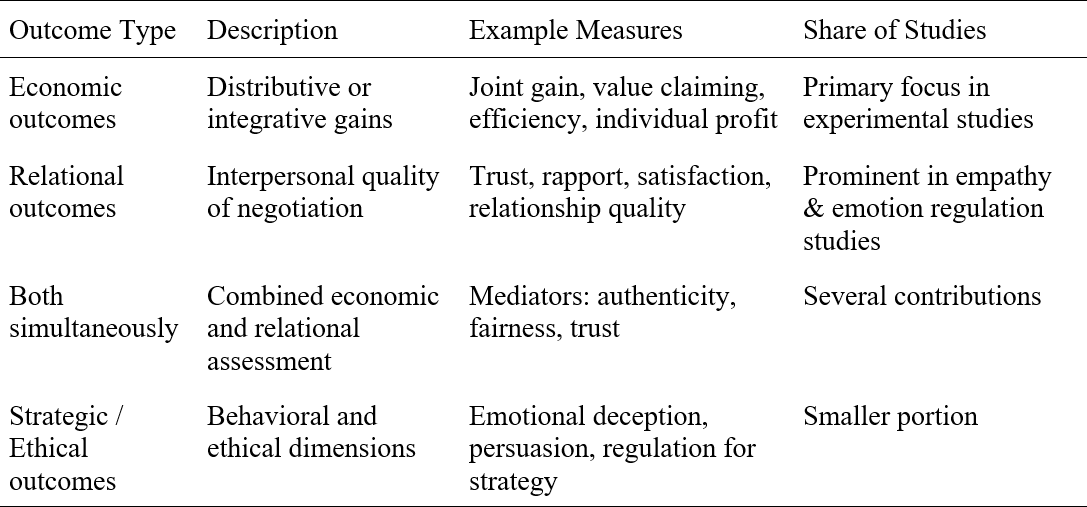
When considering outcome types, a broad distinction can be made between economic and relational negotiation outcomes. Economic outcomes, such as joint gain, value claiming, or efficiency, are a primary focus in many experimental studies. Relational outcomes, including trust, rapport, satisfaction, and relationship quality, feature prominently in studies exploring empathy, emotional expression, and regulation. A number of contributions examine both types simultaneously or investigate mediators such as authenticity, trust, or perceived fairness. In addition, some studies address strategic or ethical aspects, such as the use of emotional deception or the regulation of emotion for persuasive purposes.
Table 2 Distribution of Study Designs Across Included Studies
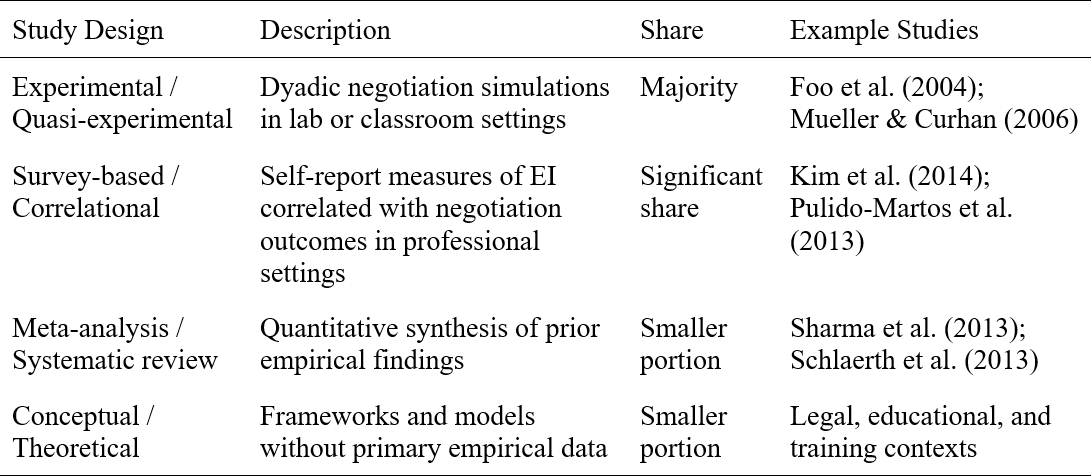
In terms of methodological design, the majority of studies rely on quantitative research approaches. Experimental or quasi-experimental designs dominate, often involving dyadic negotiation simulations in laboratory or classroom settings. In addition, a significant number of studies use survey-based data collection to capture perceived emotional competencies and their correlation with negotiation outcomes in professional settings. A smaller portion of the literature consists of meta-analyses or systematic reviews, indicating the field's maturation. Conceptual and theoretical works also play an important role, especially in legal or educational contexts where negotiation training is discussed.
Table 3 EI Models Used Across Included Studies
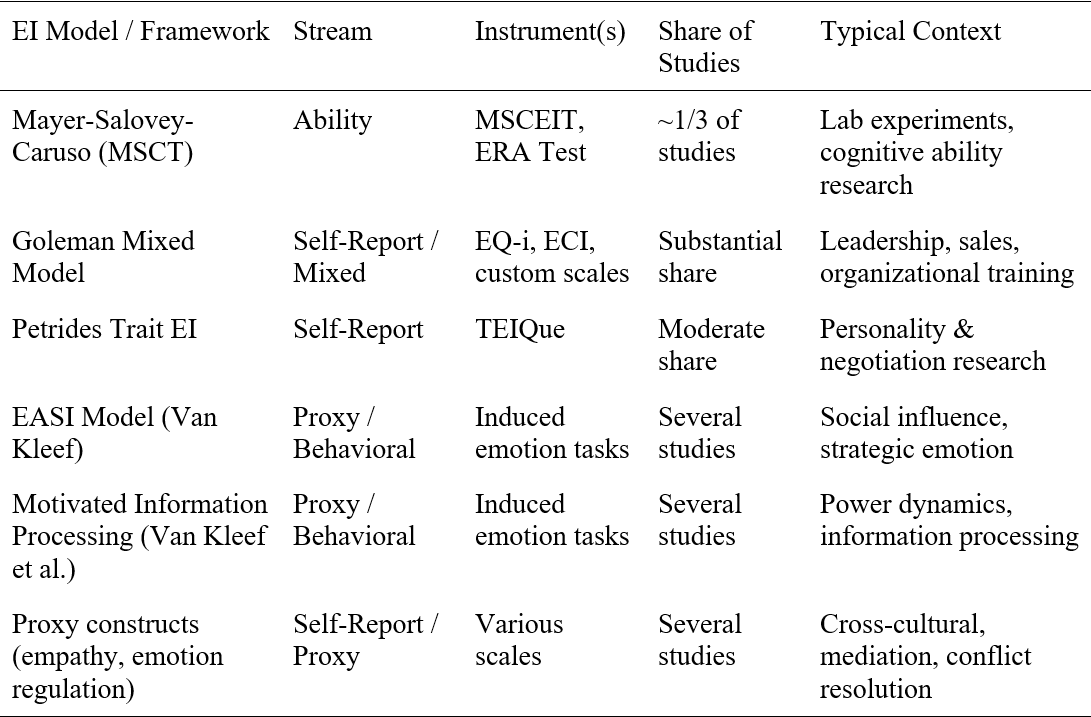
With regard to the theoretical underpinnings, the studies draw on a wide range of EI conceptualizations, reflecting the diversity of measurement approaches in the field. From a measurement standpoint, studies can be grouped into three streams: ability-based measures (e.g., MSCEIT, Mayer et al., 2002; ERA test, Schlegel et al., 2018), self-report and mixed measures (e.g., Goleman’s model, Goleman, 1995; TEIQue, Petrides & Furnham, 2001), and proxy constructs where EI is approximated through empathy, emotion regulation, or recognition accuracy. Approximately one-third of the included studies apply an ability-based framework. Mixed and trait-based models account for another substantial share, particularly in studies related to leadership, sales, or organizational training. Some studies draw on frameworks such as the EASI model (Van Kleef, 2008) or the Motivated Information Processing model (Van Kleef et al., 2008) to explain how emotions function as social signals in negotiation.
This body of literature reflects a growing interdisciplinary interest in the role of emotional intelligence (EI) in negotiation processes and outcomes. While research in this area is relatively fragmented, the studies can be systematically analyzed along several key dimensions: theoretical foundations, study design, outcome types, and negotiation contexts.
Results
This section synthesizes existing research on the role of emotional intelligence (EI) in negotiation, structured along the dimensions of our conceptual model: the development of EI, its core components, the moderating role of context, and its impact on negotiation outcomes. The review aims to clarify to what extent empirical studies support the assumed relationship between EI and negotiation outcomes, while addressing conceptual, methodological, and contextual variations that may explain inconsistencies in prior findings.
Descriptive Results of the Literature Search
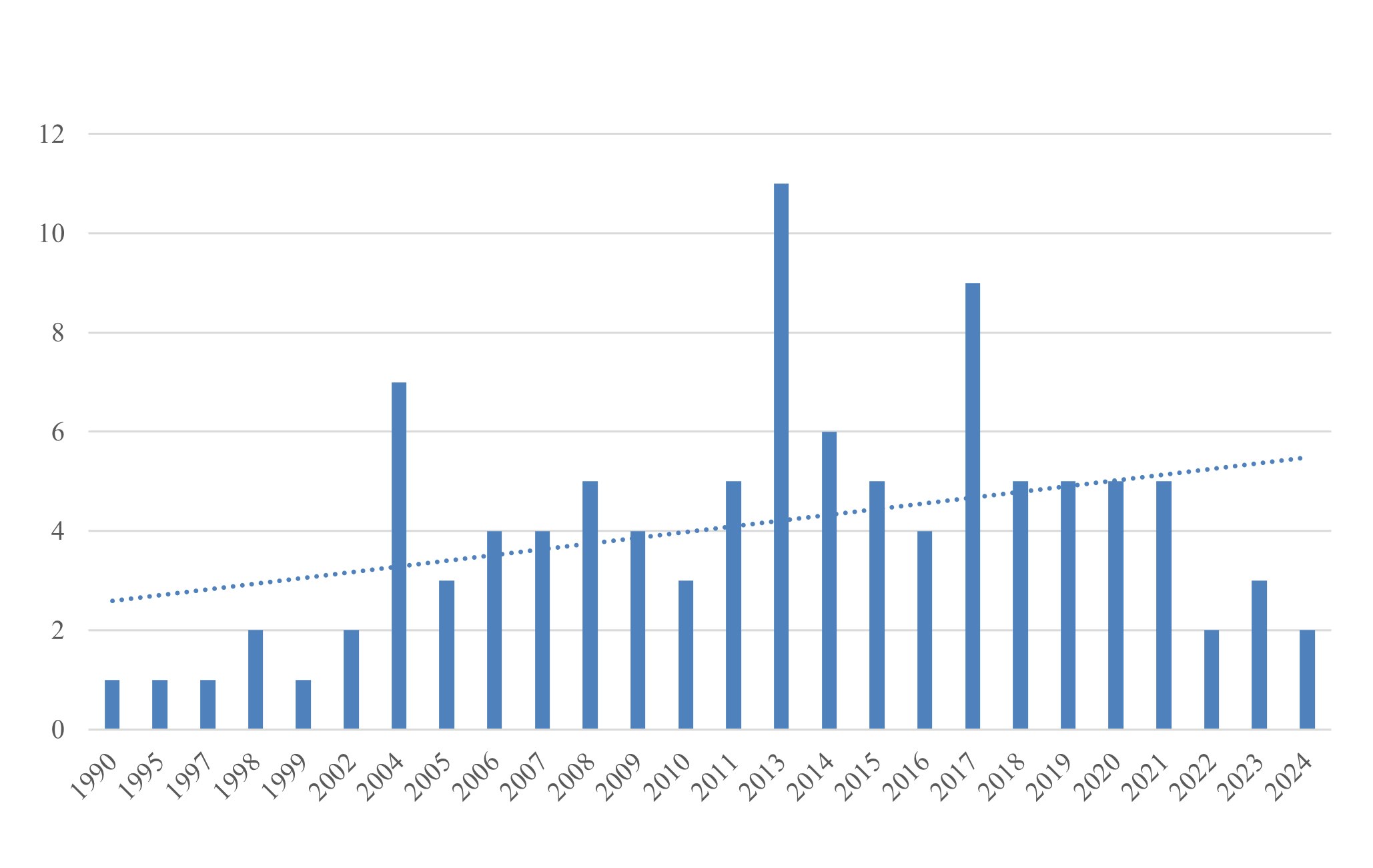
Figure 3 displays the distribution of the 105 empirical studies included in the final analysis by year of publication. The figure illustrates a gradual increase in scholarly output over time, with notable peaks around 2004, 2013, and 2017. From 2022 to 2024, publication activity remains steady at a moderate level, suggesting continued interest in the topic. As the systematic search was specifically designed to identify empirical findings on EI and negotiation outcomes, conceptual and review papers were excluded by design and are therefore not represented in this figure.
Figure 3 Distribution of reviewed articles by publication year (N=105)
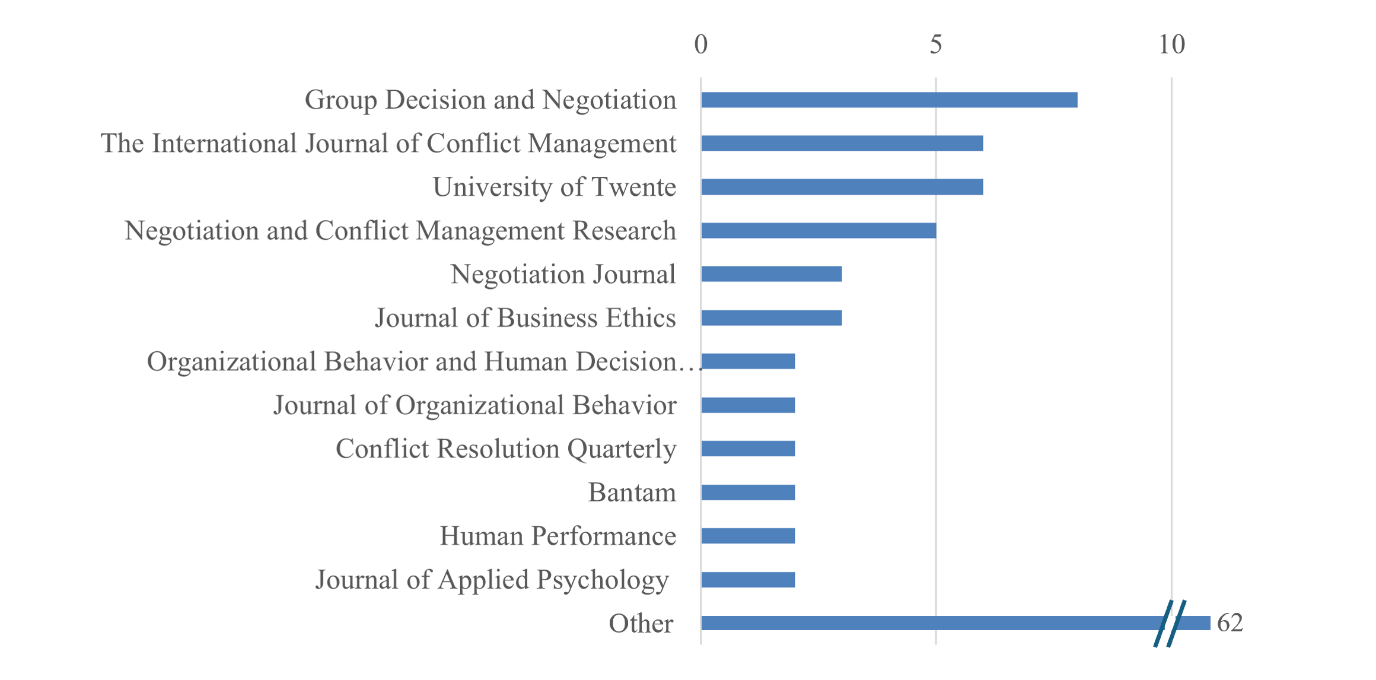
As shown in Figure 4, the reviewed articles are distributed across a broad range of journals, with Group Decision and Negotiation, Negotiation Journal, and Organizational Behavior and Human Decision Processes among the most frequent sources.
Figure 4 Distribution of reviewed articles by journal (N = 105)
Components of Emotional Intelligence
The literature consistently identifies five components of EI as relevant to negotiation: self-awareness, self-regulation, empathy, social skills, and emotional reasoning (Goleman, 1995; Mayer & Salovey, 1997). Self-awareness enables negotiators to monitor and adjust emotional states while self-regulation facilitates the constructive management of emotions under pressure (Bradberry & Greaves, 2006). Empathy supports perspective-taking and recognizing counterparts' emotional signals, which can foster rapport and trust (Galinsky et al., 2008). Social skills allow negotiators to manage relationships and adapt communication styles appropriately, and emotional reasoning enables the integration of emotional cues into strategic decision-making (Schlegel et al., 2018). While these components are analytically distinct, existing studies have not consistently prioritized specific elements or systematically compared their relative influence on negotiation outcomes, reflecting a gap in the empirical literature.
Moderating Effects: Negotiation Structure and EI Measurement
Our findings reveal that the relationship between emotional intelligence (EI) and negotiation outcomes is moderated by two key factors: the negotiation setting (dyadic vs. multiparty) and the type of EI measure. These moderators help explain the heterogeneity observed in prior empirical studies and offer a more nuanced understanding of when and how EI exerts its influence in negotiation settings.
First, negotiation setting (dyadic vs. multiparty) emerged as a significant moderator. Specifically, dyadic negotiation settings consistently amplified the positive effects of EI on outcomes such as trust, rapport, and communication. In contrast, multiparty and role-play scenarios tended to weaken or even reverse the positive influence of EI. This suggests that the interpersonal dynamics and degree of individual accountability in dyadic contexts may offer more favorable conditions for the application of emotional competencies. Whether dyadic or group settings produce stronger EI effects was examined as an exploratory moderator; the data consistently show stronger associations in dyadic contexts, though the mechanisms underlying this pattern warrant further investigation (Fulmer & Barry, 2004; Kopelman et al., 2006).
Second, the type of EI measurement, whether EI was assessed as a self-report or as an ability-based measure, was examined as a potential moderator. The stream-specific analyses revealed comparable overall associations for self-report (r = 0.208) and ability-based (r = 0.232) measures, with no statistically significant difference between streams (p = .732). However, this null result should be interpreted with caution given the limited number of ability-based studies (k = 4). The pattern across outcome types was consistent across both streams: ability-based EI showed no reliable association with economic outcomes while positive associations with relational outcomes were robust, suggesting that outcome type is a more critical boundary condition than measurement approach per se.
Taken together, these moderating effects illustrate that the influence of emotional intelligence in negotiations is not universal, but conditional, depending both on situational features (dyadic vs. multiparty negotiation settings) and the type of outcome assessed (relational vs. economic). Accounting for these moderators enables a more differentiated and empirically grounded interpretation of EI’s value in negotiation contexts.
Impact of EI on Negotiation Outcomes
Positive Outcomes (robust across contexts)
A substantial body of research supports the association between EI and positive negotiation outcomes, including trust-building, rapport, and effective communication (Elfenbein et al., 2007; Kim et al., 2014). Higher EI has been associated with more constructive interaction, including rapport and relationship satisfaction, although its association with economic outcomes is less consistent (Kim et al., 2014; Kong et al., 2016; Sharma et al., 2013). These findings are consistent across diverse contexts, suggesting that EI reliably enhances social outcomes in negotiation processes.
Negative Outcomes (context-dependent risks)
Despite these benefits, EI can also contribute to negative outcomes. Some studies highlight that negotiators may strategically use their emotional competencies for manipulation, exploitation, or deception (Galinsky et al., 2008; Olekalns & Smith, 2009; Ye et al., 2023). High EI has further been linked to escalation dynamics in competitive negotiations (Sinaceur et al., 2013), where enhanced emotional awareness may fuel conflict rather than resolve it. These findings emphasize that EI is not uniformly beneficial and can, under certain conditions, produce adverse negotiation consequences.
Contingent Outcomes (situational trade-offs)
Beyond clearly positive or negative effects, EI can also yield contingent outcomes that vary depending on situational or methodological factors. For instance, empathy may foster cooperation in dyadic negotiations but reduce assertiveness in more competitive, group-based settings (Fulmer & Barry, 2004). Similarly, strong self-regulation may enhance composure but suppress authentic emotional expression when contextual authenticity is expected (Morris & Keltner, 2000). Recent evidence also highlights authenticity trade-offs, where negotiators strategically adapt emotional displays at the cost of perceived sincerity (Tng, 2014; Ye et al., 2023). These ambivalent findings underscore that the effects of EI are often conditional and shaped by context, negotiation type, and measurement approach.
Additional Theorized Moderators
Beyond negotiation setting, personality traits, cultural norms, and power/status dynamics have been theorized to influence the relationship between EI and negotiation outcomes (Barry & Friedman, 1998; Olekalns & Smith, 2009). These factors could not be tested in the present meta-analysis due to insufficient primary data (fewer than five studies per potential moderator). Empirical support for these factors as consistent moderators therefore remains limited, and they are presented as potential avenues for future research rather than established boundary conditions within this review.
Summary Results
The literature suggests that EI is a valuable resource in negotiations, particularly in fostering trust, rapport, and effective communication. However, its impact on negotiation outcomes is not universally positive and is contingent on both the context in which negotiations occur and the way EI is measured. While positive social outcomes are robustly associated with EI across contexts, the effects on economic outcomes are less consistent, and the potential for EI to contribute to negative or contingent outcomes in certain settings should be acknowledged. Additionally, the operationalization of EI emerged as a significant moderator, emphasizing that different measurement approaches may yield varying associations with negotiation outcomes.
These insights set the stage for the subsequent meta-analysis, which empirically tests the theoretical assumptions and patterns identified in this review, providing an objective assessment of the relationship between EI and negotiation outcomes across the existing body of research.
Meta-Analysis Results
The meta-analysis was based on 155 effect sizes extracted from 37 empirical studies. One study (Artinger et al., 2014) was excluded from all quantitative analyses as it did not employ a validated EI instrument but instead coded behavioral emotion expressions in chat transcripts. One further study (Sharma et al., 2013) requires specific methodological consideration: this study is itself a meta-analysis aggregating findings across both EI measurement approaches. Rather than using Sharma et al. (2013) as a resource to identify additional primary studies, which would risk double-counting primary studies already in our dataset, we retained its reported effect sizes (4 in total: 2 economic and 2 relational) in the overall analysis, treating it as an independent prior synthesis of the EI–negotiation relationship. Because it spans both measurement approaches, Sharma et al. (2013) was excluded from the stream-specific (self-report vs. ability) analyses to avoid confounding the subgroup estimates. Accordingly, the overall analysis (k = 155) comprises the self-report stream (k = 134), the ability-based stream (k = 17), and these 4 effect sizes (134 + 17 + 4 = 155). The 37 studies comprise 32 self-report studies (k = 134) and 4 ability-based studies (k = 17), plus Sharma et al. (2013), which entered only the overall analysis (32 + 4 + 1 = 37). The random-effects model yielded an average Fisher's Z of 0.212 with a standard error of 0.022, which was statistically significant (p < .001). When back-transformed, this equates to r = 0.209 (95% CI [0.167, 0.250]), indicating a small but robust positive relationship between EI and negotiation outcomes overall.
An examination of heterogeneity showed that effect sizes varied substantially across the included studies. The Q-statistic was Q(154) = 1434.91, p < .001, suggesting that variability in effect sizes far exceeded what would be expected by chance alone. The I² value was 88.2%, indicating that nearly 88% of the observed variance is attributable to true heterogeneity rather than sampling error. The estimated between-study variance was τ² = 0.064, further underscoring the high degree of variability in the dataset. These findings clearly justify the exploration of moderators to explain when and how EI is most strongly associated with negotiation outcomes.
Outcome type emerged as a significant moderator of the EI-outcome relationship within the self-report stream (QM(df = 1) = 7.56, p = .006). Self-report EI showed a stronger association with relational outcomes such as trust, rapport, and communication quality (r = 0.262, 95% CI [0.202, 0.321], k = 73) than with economic outcomes such as individual gain or joint value (r = 0.140, 95% CI [0.076, 0.202], k = 61), confirming that EI is substantially more influential for relational aspects of negotiation.
To treat self-report and ability-based measures of EI as analytically distinct rather than as a moderator within a single pooled analysis, we conducted separate random-effects meta-analyses for each measurement stream.
The self-report stream comprised 32 studies providing 134 effect sizes. The random-effects model yielded a statistically significant positive association between self-report EI and negotiation outcomes (r = 0.208, 95% CI [0.162, 0.253], p < .001). Heterogeneity was substantial (I² = 89.0%, τ² = 0.066, Q(133) = 1309.47, p < .001), indicating that true effect sizes vary considerably across studies. Within the self-report stream, outcome type emerged as a significant moderator (QM(df = 1) = 7.56, p = .006): self-report EI showed a stronger association with relational outcomes such as trust, rapport, and communication quality (r = 0.262, 95% CI [0.202, 0.321], k = 73) than with economic outcomes such as individual gain or joint value (r = 0.140, 95% CI [0.076, 0.202], k = 61).
The ability-based stream comprised four studies providing 17 effect sizes, drawing on performance-based instruments such as the MSCEIT and the ERA test. The random-effects model also yielded a statistically significant positive association (r = 0.232, 95% CI [0.101, 0.354], p = .001), with similarly high heterogeneity (I² = 83.8%, τ² = 0.065, Q(16) = 120.60, p < .001). Given that only four primary studies employed ability-based EI measures, moderator analyses within this stream were not conducted, as the number of studies is insufficient for reliable estimation. The subgroup pattern nevertheless mirrored that of the self-report stream: ability-based EI showed no significant association with economic outcomes (r = 0.099, 95% CI [-0.087, 0.277], k = 8), while the association with relational outcomes was positive and significant (r = 0.338, 95% CI [0.187, 0.473], k = 9).
A formal comparison of the two streams revealed no statistically significant difference between self-report and ability-based EI in their overall association with negotiation outcomes (QM(df = 1) = 0.117, p = .732). This null result must be interpreted with considerable caution: the ability-based stream is represented by only four studies, which substantially limits statistical power to detect between-stream differences even if they exist. The wide confidence interval for the ability-based estimate [0.101, 0.354] further underscores this uncertainty. Taken together, the stream-specific analyses suggest that the type of negotiation outcome, relational versus economic, constitutes a more robust boundary condition than the measurement approach per se.
With respect to the concern that the strong association between self-report EI and relational outcomes may partly reflect common method bias, both constructs being assessed via self-report, this possibility cannot be ruled out and should be acknowledged as a methodological limitation. Several procedural and statistical remedies are available to researchers working with self-report data, including temporal separation of predictor and criterion measurement, use of anonymous responding, statistical controls for same-source variance, and confirmatory factor analytic approaches to assess method effects (Podsakoff et al., 2003). Future research on EI in negotiation should employ multi-source or multi-method designs, such as pairing self-report EI with observer ratings or behavioral outcome measures, to disentangle substantive from artifactual effects in this subgroup.
Visual inspection of the funnel plot did not reveal strong asymmetry, suggesting that publication bias is unlikely to threaten the validity of the findings. This conclusion was supported by Egger’s regression test, which was not statistically significant (Overall: p = .119; Self-Report stream: p = .075; Ability stream: p = .124). Taken together, these results provide confidence that the observed effect sizes are not primarily driven by selective reporting.
In summary, the meta-analysis provides robust evidence that emotional intelligence is positively associated with negotiation outcomes overall (r = 0.209, 95% CI [0.167, 0.250]), but with substantial heterogeneity across studies (I² = 88.2%). Separating studies by measurement approach, self-report EI (k = 32, r = 0.208) and ability-based EI (k = 4, r = 0.232) showed comparable associations, with no statistically significant difference between streams (p = .732). Across both streams, the effect was consistently stronger for relational outcomes than for economic outcomes. Context further moderated the association, with dyadic settings amplifying positive effects. These findings underscore the importance of adopting a differentiated view of EI in negotiation research, recognizing that the type of outcome and the situational context shape its impact more robustly than the measurement approach per se.
Negative Associations in the Meta-Analysis
In addition to the overall positive association, several studies reported negative correlations between EI and negotiation outcomes. To provide a systematic overview of these findings, Table 4 summarizes all studies that reported negative correlations between EI and negotiation outcomes.
Table 4 Studies Reporting Negative Associations Between EI and Negotiation Outcomes
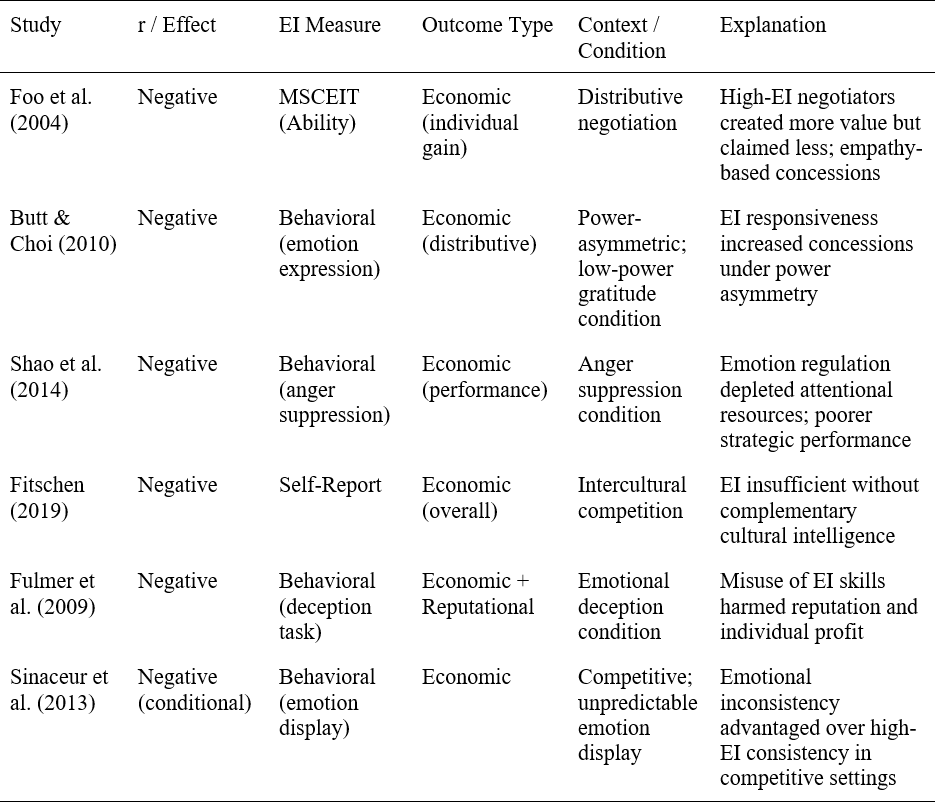
Across the studies listed in Table 4, several consistent patterns emerged. Negative associations were most frequently observed in distributive or highly competitive contexts, where high-EI negotiators achieved lower individual gains despite often creating more integrative potential (Foo et al., 2004). In power-asymmetric settings, particularly when low-power negotiators expressed gratitude, EI-related responsiveness increased concessions and reduced distributive outcomes (Butt & Choi, 2010). Other findings indicated that emotion regulation efforts, such as anger suppression, depleted attentional resources and led to poorer performance (Shao et al., 2014). In intercultural competitions, EI alone was insufficient and could even undermine performance without complementary cultural intelligence (Fitschen, 2019). Moreover, studies on emotional deception showed that misusing EI skills harmed reputation and individual profit (Fulmer et al., 2009). Taken together, these cases suggest that EI is not uniformly beneficial: under specific boundary conditions such as competition, power asymmetry, intercultural misfit, or emotionally taxing regulation demands, high EI can be correlated with lower individual economic outcomes, even when relational or process-related outcomes improve.
Discussion
This study systematically examined the role of emotional intelligence (EI) in negotiation by combining a structured literature review with a meta-analysis, guided by a newly developed conceptual model. The findings are discussed below in terms of their theoretical and practical implications.
The findings reveal that EI's effectiveness in negotiation is not uniform but moderated by two key factors: negotiation structure (dyadic vs. multiparty) and outcome type (relational vs. economic). Both factors are discussed in the theoretical and practical implications below.
Theoretical Implications
The findings contribute to the negotiation and emotional intelligence literature by providing a differentiated and context-sensitive understanding of EI’s role in negotiations. First, the study confirms that EI should not be conceptualized as a unitary, universally beneficial trait but rather as a dynamic and trainable set of abilities with varying effects depending on contextual factors and measurement approaches. This aligns with previous theoretical work suggesting that EI encompasses distinct components -self-awareness, self-regulation, empathy, social skills, and emotional reasoning- that contribute differently to negotiation processes (Goleman, 1995; Mayer & Salovey, 1997).
Second, the meta-analysis empirically supports the moderating role of both context and the type of EI measure, highlighting that the effectiveness of EI in negotiations is contingent upon these conditions. Dyadic contexts strengthen the positive effects of EI, whereas group and role-play contexts reduce or reverse these effects. With respect to measurement approach, the present analysis found no statistically significant difference between self-report and ability-based EI streams at the overall level, though this result should be interpreted cautiously given the limited number of ability-based studies (k = 4). Notably, the pattern across outcome types converged across both streams, ability-based EI similarly showed no reliable association with economic outcomes while positive associations with relational outcomes were consistent, suggesting that outcome type is a more robust boundary condition than measurement approach per se.
Third, while the meta-analysis confirmed small to moderate positive overall effects of EI on negotiation outcomes, the findings also provide evidence for negative outcomes (e.g., emotional manipulation, escalation) and contingent outcomes (e.g., context-dependent ambivalence, authenticity trade-offs). This challenges the assumption within the literature that EI primarily enhances performance and instead suggests the need for a more cautious and differentiated interpretation of EI’s instrumental value in negotiations.
As summarized in Table 4, the subset of studies reporting negative correlations provides consistent evidence for boundary conditions under which EI may undermine negotiation performance. Specifically, negative effects tend to occur in distributive or competitive bargaining situations, under power asymmetry, or when negotiators face intercultural or emotionally taxing conditions such as anger suppression. These findings highlight that EI can produce counterproductive outcomes when empathy, regulation, or sensitivity to emotional cues outweigh assertive, goal-oriented behavior.
Beyond identifying contextual moderators, these findings also illuminate the mechanisms underlying EI’s dual impact on negotiation outcomes. High EI facilitates value creation by enhancing empathy, perspective-taking, and information exchange, yet it can impede value claiming when negotiators become overly accommodating or emotionally reactive to counterpart cues. In competitive contexts, emotional attunement may heighten concession tendencies, whereas excessive emotion regulation can drain cognitive resources and reduce strategic focus. Together, these mechanisms explain why EI functions as both an asset and a potential liability depending on the negotiation phase and situational demands.
Regarding the development of EI and its implications for negotiation training, research consistently demonstrates that EI can be developed through targeted mechanisms, including feedback on emotional behavior, reflective practices such as journaling, and structured training or coaching interventions utilizing simulations and emotion-focused learning (Reilly, 2005; Schutte et al., 2013; Katz & Sosa, 2015). While promising, empirical studies directly examining the impact of EI training on negotiation outcomes remain scarce, highlighting a need for further controlled research in this area. However, the potential to enhance negotiators’ emotional regulation, perspective-taking, and self-awareness through training is supported across organizational psychology and negotiation studies, indicating pathways for building EI capacity relevant to negotiation contexts.
Practical Implications
The results offer several practical implications for negotiation practitioners, trainers, and organizations. EI can be a valuable asset for negotiators, particularly in fostering trust, rapport, and effective communication in dyadic negotiations. Training focusing on developing EI-related skills, such as emotional regulation, empathy, and perspective-taking, may enhance negotiators’ effectiveness, especially in collaborative or integrative negotiation contexts. However, practitioners should be cautious about over-relying on EI as a universal tool for negotiation outcomes, particularly in competitive or multiparty negotiation settings where high levels of empathy might lead to unnecessary concessions or where the expression of emotions could be strategically manipulated. Organizations considering EI training programs should view them as complementary tools that can improve relational aspects of negotiation while recognizing their limitations concerning economic negotiation outcomes.
Limitations and Directions for Future Research
Several limitations should be acknowledged when interpreting these findings. The meta-analysis is based on a diverse set of studies using different measurement instruments for EI, including performance-based tests, self-report scales, and behavioral proxies, leading to potential inconsistencies in how EI is operationalized across studies. In particular, the strong association between self-report EI and relational outcomes may partly reflect common method bias, as both constructs are typically assessed via self-report in the same study; future research employing multi-source designs would help disentangle substantive from artifactual effects. Podsakoff et al. (2003) provide a comprehensive overview of procedural and statistical remedies that future studies could apply to mitigate common method bias in self-report research on EI and negotiation outcomes. Additionally, many studies rely on student samples, which may limit the generalizability of the findings to professional negotiation contexts. The heterogeneity in negotiation settings, outcome measures, and study designs further complicates direct comparisons and the interpretation of effect sizes. Moreover, the aggregation of multiple EI dimensions into composite scores, as commonly employed in these studies, may mask the differential relevance of specific emotional competencies for negotiation outcomes, leading to an underestimation or overestimation of their unique effects. Furthermore, as most primary studies relied on aggregated overall EI scores, compensatory effects among EI facets (e.g., self-awareness offsetting low emotion regulation) may have masked differential relationships between specific EI components and negotiation outcomes.
A particularly important limitation concerns the failure of most primary studies to account for dyadic interdependence in negotiation settings. Because negotiation outcomes are jointly produced by two parties, the performance of one negotiator is inherently linked to that of their counterpart. This means that EI may matter more for one partner than for the other, and that interaction effects are possible – for example, a high-EI negotiator may perform differently depending on whether their counterpart also has high or low EI. Furthermore, treating each negotiator’s outcome as an independent observation, as most studies do, violates standard independence assumptions and may inflate effect size estimates. Future research should employ appropriate analytical techniques for dyadic data, such as the Actor-Partner Interdependence Model (APIM; Kenny et al., 2006), to more accurately capture the relational dynamics through which EI influences negotiation processes and outcomes.
Future research should aim to standardize EI measurement in negotiation studies and explore the differential impact of trait versus ability EI on negotiation outcomes. Randomized controlled trials examining the effects of EI training interventions on negotiation performance would provide valuable insights into the practical utility of EI development programs. Furthermore, research should investigate the role of other potential moderators, such as cultural norms, personality traits, and power dynamics, to build a more comprehensive understanding of the boundary conditions under which EI contributes to negotiation outcomes. Finally, examining the trade-offs between relational and economic outcomes in negotiations involving high-EI negotiators could yield important insights for theory and practice.
Conclusion
This study advances the understanding of emotional intelligence (EI) in negotiation by synthesizing the fragmented literature through a structured review and systematically evaluating the empirical evidence via a meta-analysis. The findings demonstrate a small but robust overall positive association between EI and negotiation outcomes. Within the self-report stream, EI showed a consistently stronger effect on relational outcomes than on economic outcomes, a difference that was statistically significant. Ability-based EI mirrored this pattern across both measurement streams. These results confirm that EI is substantially more influential in shaping relationship-oriented aspects of negotiation than in producing direct economic gains, and that outcome type – rather than measurement approach – is the more robust boundary condition.
This research demonstrates that EI is a robust predictor of positive relational outcomes in negotiation, but its influence on economic outcomes is small and bounded by context and measurement. These insights provide a realistic and evidence-based framework for scholars and practitioners aiming to understand and leverage EI in negotiation settings, encouraging a more differentiated and context-sensitive approach to the study and application of EI in negotiations.
References
Ahmad, A. H., Masri, R., Jesmin, F. H. M., Shamsudin, M. F. (2021). How do Emotions Influence Negotiators in Negotiations? ICSST (2021). 10.4108/eai.25-11-2021.2319312.
Aquino, K., Becker, T. (2005). Lying in Negotiations: How Individual and Situational Factors Influence the Use of Neutralization Strategies. Journal of Organizational Behavior, 26(6), 661-679.
Artinger, S., Vulkan, N., Shem-Tov, Y. (2014). Entrepreneurs’ Negotiation Behavior. Small Business Economics, 44(4).
Barry, B., Fulmer, I. S., Van Kleef, G. A. (2004). I laughed, I cried, I settled: The role of emotion in negotiation. The handbook of negotiation and culture, 71-94. Stanford University Press.
Barry, B., Fulmer, I. S., Goates, N. (2006). Bargaining with feeling: Emotionality in and around negotiation. Negotiation theory and research, 99-127.
Benetti, S., Ogliastri, E., Caputo, A. (2013). Distributive and Integrative Negotiation Strategies in Cross-Cultural Contexts. Journal of Management & Organization, 27(4), 786-808.
Bernard, P. E. (2009). Bringing Soul to International Negotiation. Negotiation Journal, 25(2), 147-159.
Borenstein, M., Hedges, L. V., Higgins, J. P. T., Rothstein, H. R. (2009). Introduction to meta-analysis. John Wiley & Sons.
Bradberry, T., Greaves, J. (2006). The emotional intelligence quick book: Everything you need to know to put your EQ to work. Simon and Schuster.
Butt, A. N., Choi, J. N., Jaeger, A. (2005). The Effects of Self‐Emotion, Counterpart Emotion, and Counterpart Behavior on Negotiator Behavior: A Comparison of Individual‐Level and Dyad‐Level Dynamics. Journal of Organizational Behavior, 26(6), 681-704.
Butt, A. N., Choi, J. N. (2010). Does Power Matter? Negotiator Status as a Moderator of the Relationship Between Negotiator Emotion and Behavior. International Journal of Conflict Management, 21(2), 124-146.
Campagna, R. L., Mislin, A. A., Bottom, W. P. (2019). Motivated by Guilt and Low Felt Trust: The Impact of Negotiators’ Anger Expressions on the Implementation of Agreements. Journal of Behavioral Decision Making, 32(4), 450-470.
Charoensap-Kelly, P. (2021). How much is too much? Effects of core concerns accommodativeness on emotion, credibility and integrative intention in supervisor-subordinate conflict negotiation. International Journal of Conflict Management, 32(4), 574-598.
Craver, C. B. (2013). Emotional Intelligence and Negotiation Performance. GW Law Faculty Publications & Other Works.
Côté, S. (2014). Emotional intelligence in organizations. Annual Review of Organizational Psychology and Organizational Behavior, 1(1), 459-488.
Druckman, D., Olekalns, M. (2007). Emotions in Negotiation. Group Decision and Negotiation, 17(1), 1-11.
Elezovic, K. (2020). The effect of emotional intelligence on B2B negotiations in terms of preparations, behaviours and outcomes. [Master’s thesis, University of Twente].
Elfenbein, H. A., Foo, M. D., White, J., Tan, H. H., Aik, V. C. (2007). Reading your counterpart: The benefit of emotion recognition accuracy for effectiveness in negotiation. Journal of Nonverbal Behavior, 31, 205-223.
England, T. K., Nagel, G. L. (2022). Developing Emotional Intelligence Skills for E-Negotiations. Journal of Education for Business, 97(6), 413-418.
Esmaeillou, M., Khodayari, A., Ghasemi, H. (2013). Relationship between negotiation strategies and emotional intelligence of Iranian sport federations’ officials. European Journal of Experimental Biology, 3(3), 382- 388.
Estrada, C. R., de la Torre Enríquez, D. I., Madrazo, S. A. D. (2017). Influence of personality and emotional intelligence on the negotiation style an empirical study in Mexico. In Technology, innovation, Finance and CRM: Repercussions on Competitiveness. (pp. 9-30). Universidad de Guadalajara.
Findlay, S. D., Thagard, P. (2011). Emotional Change in International Negotiation: Analyzing the Camp David Accords Using Cognitive-Affective Maps. Group Decision and Negotiation, 23, 1281-1300.
Fitschen, H. (2019). Cross-cultural intelligence moderates between emotional intelligence of the negotiator and the negotiation outcome. [Master’s thesis, University of Twente].
Foo, M. D.; Elfenbein, H. A.; Tan, H. H.; Aik, V. C. (2004). Emotional intelligence and negotiation: The tension between creating and claiming value. International Journal of Conflict Management, 15(4), 411-429.
Fulmer, I. S., Barry, B., Long, D. A. (2009). Lying and Smiling: Informational and Emotional Deception in Negotiation. Journal of Business Ethics, 88(4), 691-709.
Fulmer, I. S., Barry, B. (2004). The Smart Negotiator: Cognitive Ability and Emotional Intelligence in Negotiation. The International Journal of Conflict Management, 15(3), 245-272.
Galinsky, A. D., Maddux, W. W., Gilin, D., White, J. B. (2008). Why it pays to get inside the head of your opponent - The Differential Effects of Perspective Taking and Empathy in Negotiations. Psychological Science, 19(4), 378-384.
Gaspar, J. P., Methasani, R., Schweitzer, M. E. (2021). Emotional Intelligence and Deception: A Theoretical Model and Propositions. Journal of Business Ethics, 177(3), 567-584.
Gaspar, J. P., Methasani, R., Schweitzer, M. (2019). Fifty Shades of Deception: Characteristics and Consequences of Lying in Negotiations. Academy of Management Perspectives, 33(1).
Goleman, D. (1995). Emotional intelligence: Why it can matter more than IQ. Bantam.
Goleman, D. (1998). Working with emotional intelligence. Bantam.
Goleman, D. (2004). What Makes a Leader? Harvard Business Review.
Griessmair, M. (2017). Ups and Downs: Emotional Dynamics in Negotiations and Their Effects on (In)Equity. Group Decision Negotiation, 26, 1061-1090.
Grubb, A. R., Brown, S. J., Hall, P. (2017). The Emotionally Intelligent Officer? Exploring Decision-Making Style and Emotional Intelligence in Hostage and Crisis Negotiators and Non-Negotiator-Trained Police Officers. Journal of Police and Criminal Psychology, 33(2), 123-136.
Gupta, V. (2016). Is it really good to be emotionally intelligent? A review of literature. Management Dynamics, 16(2), 64-83.
Gurieva, S., Kuznetsova, I., Yumkina, E. (2018). Emotional Intelligence and Styles of Behavior in Business Communication of Middle Managers. Revista Espacios, 39(8), 19.
Hjertø, K. B., Schei, V. (2010). When Understanding Your Feelings Hurts Performance: Emotional Intelligence in Negotiating Groups. 23rd Annual International Association of Conflict Management Conference, Boston, Massachusetts, June 24-27.
Hovestad, P. (2014). Effect of Emotional Intelligence on Negotiation. [Master’s thesis, University of Twente].
Hunsaker, D. A. (2017). Anger in Negotiations: A Review of Causes, Effects, and Unanswered Questions. Negotiation and Conflict Management Research, 10(3), 220-241.
Janze, L., Lundberg, M. (2016). When Proving You Are Right Is Not Enough - The Relationship Between Emotional Intelligence and Interest-Based Negotiations Among Purchasers. [Master’s thesis, Jönköping University].
Johnson, J. G. (2015). Negotiating with Emotional Intelligence. Success Strategies From Women in STEM.
Joseph, D. L., Newman, D. A. (2010). Emotional intelligence: an integrative meta-analysis and cascading model. Journal of Applied Psychology, 95(1), 54.
Katz, N. H., Sosa, A. (2015). The emotional advantage: The added value of the emotionally intelligent negotiator. Conflict Resolution Quarterly, 33(1), 57-74.
Kelly, E. J., & Kaminskienė, N. (2016). Importance of Emotional Intelligence in Negotiation and Mediation. International Comparative Jurisprudence.
Kill, P. (2021). How do personality traits affect the relationship between emotional intelligence (EI) and the preferred conflict mode of a negotiator? [Master’s thesis, University of Twente].
Kim, K., Cundiff, N. L. A., Choi, S. B. (2014). The Influence of Emotional Intelligence on Negotiation Outcomes and the Mediating Effect of Rapport: A Structural Equation Modeling Approach. Negotiation Journal, 30(1), 49-68.
Kim, K., Cundiff, N. L., Choi, S. B. (2015). Emotional Intelligence and Negotiation Outcomes: Mediating Effects of Rapport, Negotiation Strategy, and Judgment Accuracy. Group Decision and Negotiation, 24(3), 477-493.
Kong, D. T., Tuncel, E., Parks, J. M. (2011). Anticipating Happiness in a Future Negotiation: Anticipated Happiness, Propensity to Initiate a Negotiation, and Individual Outcomes. Negotiation and Conflict Management Research, 4(3), 219-247.
Kong, D. T., Bottom, W. P., Konczak, L. J. (2016). Negotiators' emotion perception and value-claiming under different incentives. International Journal of Conflict Management, 27(2), 146-171.
Kong, D. T., Bottom, W. P., Konczak, L. J. (2011). Re-examining the role of emotional intelligence in negotiations. In 24th Annual Meeting of the International Association for Conflict Management, Istanbul, Turkey.
Kopelman, S., Rosette, A. S., Thompson, L. (2006). The three faces of Eve: Strategic displays of positive, negative, and neutral emotions in negotiations. Organizational Behavior and Human Decision Processes, 99(1), 81-101.
Kopelman, S., Rosette, A. S. (2007). Cultural Variation in Response to Strategic Emotions in Negotiations. Group Decision and Negotiation, 17(1), 65-77.
Ladika, L., Syafwandi, S., Susetyo, B. (2020). The effect of competency, negotiation model and emotional intelligence in the stakeholders capability on result of negotiation construction dispute in Indonesia. International review of management and marketing, 10(3), 73.
Lelieveld, G.-J., Van Dijk, E., Van Kleef, G. A., Van Beest, I. (2013). Does Communicating Disappointment in Negotiations Help or Hurt? Solving an Apparent Inconsistency in the Social-Functional Approach to Emotions. Journal of Personality and Social Psychology, 105(4), 605-620.
Manna, D. R., Smith, A. D. (2004). Exploring the Need for Emotional Intelligence and Awareness Among Sales Representatives. Marketing Intelligence & Planning, 22(1), 66-83.
Manoraj, V. (2018). Empathy – The Key to Developing Effective Negotiators. King’s College
Mayer, J. D., Caruso, D. R., Salovey, P. (1999). Emotional intelligence meets traditional standards for an intelligence. Intelligence, 27(4), 267-298.
Mayer, J. D., Roberts, R. D., Barsade, S. G. (2008). Human abilities: Emotional intelligence. Annual Review of Psychology, 59, 507-536.
Mayer, J. D., Salovey, P., Caruso, D. R. (2002). MSCEIT user's manual. Multi-Health Systems.
Mayer, J. D., Salovey, P., Caruso, D. R. (2004). Emotional intelligence: Theory, findings, and implications. Psychological Inquiry, 15(3), 197-215.
Mayer, J. D., Salovey, P. (1997). What is emotional intelligence? In: Salovey P, Sluyter D (eds) Emotional development and emotional intelligence: implications for educators. Basic Books, New York
Miners, C. T. H., Rees, L. (2022). Emotional Intelligence in Workplace Negotiations. De Gruyter Handbook of Organizational Conflict Management, Chapter 2.
Mueller, J. S., Curhan, J. R. (2006). Emotional Intelligence and Counterpart Mood Induction in a Negotiation. International Journal of Conflict Management, 17(2), 110-128.
Mulu, F., Chungo, D. (2023). Emotions in Negotiation and Mediation: Strategies for Managing Emotional Dynamics. International Journal of Research and Innovation in Social Science, 7(5), 1732-1741.
Ogilvie, J. R., Carsky, M. L. (2002). Building Emotional Intelligence in Negotiations. International Journal of Conflict Management, 13(4), 381-400.
Olekalns, M., Lau, F., Smith, P. L. (2007). Resolving the Empty Core: Trust as a Determinant of Outcomes in Three-Party Negotiations. Group Decision Negotiation (2007) 16:527-538, 16(6), 527-538.
Olekalns, M., Smith, P. L. (2009). Mutually Dependent: Power, Trust, Affect and the Use of Deception in Negotiation. Journal of Business Ethics, 85(3), 347-365.
Overbeck, J. R., Neale, M. A., Govan, C. L. (2010). I Feel, Therefore You Act: Intrapersonal and Interpersonal Effects of Emotion on Negotiation as a Function of Social Power. Organizational Behavior and Human Decision Processes, 112(2), 126-139.
O’Connor, P. J., Hill, A., Kaya, M., Martin, B. (2019). The measurement of emotional intelligence: A critical review of the literature and recommendations for researchers and practitioners. Frontiers in Psychology, 10, (1116).
O’Rourke, C. (2018). Emotional Intelligence and its links to the Negotiating Skills of Leaders. [Master’s thesis, National College of Ireland].
Page, M. J., McKenzie, J. E., Bossuyt, P. M., Boutron, I., Hoffmann, T. C., Mulrow, C. D., Shamseer, L., Tetzlaff, J. M., Akl, E. A., Brennan, S. E., Chou, R., Glanville, J., Grimshaw, J. M., Hróbjartsson, A., Lalu, M. M., Li, T., Loder, E. W., Mayo-Wilson, E., McDonald, S., McGuinness, L. A., Stewart, L. A., Thomas, J., Tricco, A. C., Welch, V. A., Whiting, P., Moher, D. (2021). The PRISMA 2020 statement: An updated guideline for reporting systematic reviews. BMJ, 372, n71.
Pandey, S., Sajjanapu, S., Sangwan, G. (2015). Study on effect of emotional intelligence on conflict resolution style. Indian Journal of Science and Technology, 8(6), 71-81.
Petrides, K. V., Furnham, A. (2001). Trait emotional intelligence: Psychometric investigation with reference to established trait taxonomies. European Journal of Personality, 15(6), 425-448.
Potworowski, G., Kopelman, S. (2008). Strategic Display and Response to Emotions: Developing Evidence-Based Negotiation Expertise in Emotion Management (NEEM). Negotiation and Conflict Management Research, 1(4).
Podsakoff, P. M., MacKenzie, S. B., Lee, J.-Y., Podsakoff, N. P. (2003). Common method biases in behavioral research: A critical review of the literature and recommended remedies. Journal of Applied Psychology, 88(5), 879-903.
Prassa, K., Perzikianidis, C., Lekka, D., Avgoustaki, A., Stalikas, A. (2024). Emotions in Negotiation – A Boon or a Bane? Hellenic Journal of Psychology, 21, 26-48.
Pulido-Martos, M., Lopez-Zafra, E., Augusto-Landa, J. M. (2013). Perceived emotional intelligence and perceptions of negotiation. Journal of Applied Social Psychology, 43(2), 408-417.
Ramirez-Fernandez, J., Ramirez-Marin, J. Y., Munduate, L. (2017). I Expected More from You: The Influence of Close Relationships and Perspective Taking on Negotiation Offers. Group Decision and Negotiation, 27(1), 85-105.
Rees, L., Kopelman, S. (2019). Logics and Logistics for Future Research: Appropriately Interpreting the Emotional Landscape of Multicultural Negotiation. Negotiation and Conflict Management Research, 12(2).
Reilly, P. (2005). Teaching Law Students How to Feel: Using Negotiations Training to Increase Emotional Intelligence. Negotiation Journal, 21(2), 301-314.
Reppert, L. (2020). The Effect of Emotional Intelligence on Negotiation Performance. [Master’s thesis, University of Twente].
Riva, G. (2006). Strategic Emotion in Negotiation: Cognition, Emotion, and Culture. From Communication to Presence: Cognition, Emotions, and Culture Towards the Ultimate Communicative Experience: Festschrift in Honor of Luigi Anolli, 9(8.2), 166.
Rodrigues, N. J. P., Matos, C. I. V. (2024). The Relationship Between Managers’ Emotional Intelligence and Project Management Decisions. Administrative Sciences, 14.
Saarni, C. (2014). Improving negotiation effectiveness with skills of emotional competence. In Handbook of International Negotiation: Interpersonal, Intercultural, and Diplomatic Perspectives (pp. 175-180). Cham: Springer International Publishing.
Saarni, C. (2011). Emotional competence and effective negotiation: the integration of emotion understanding, regulation, and communication. Psychological and political strategies for peace negotiation: A cognitive approach, 55-74.
Salovey, P., Mayer, J. D. (1990). Emotional intelligence. Imagination, Cognition and Personality, 9(3), 185-211.
Schlaerth, A., Ensari, N., Christian, J. (2013). A meta-analytical review of the relationship between emotional intelligence and conflict resolution. Group Processes & Intergroup Relations, 16(1), 126-136.
Schlegel, K., Mehuc, M., Peer, J. M. v., Scherer, K. R. (2018). Sense and sensibility: The role of cognitive and emotional intelligence in negotiation. Journal of Research in Personality, 74, 6-15.
Schroth, H. A. (2008). Some Like It Hot: Teaching Strategies for Managing Tactical Versus Genuine Anger in Negotiations. Negotiation and Conflict Management Research, 1(4), 315-332.
Schutte, N. S., Malouff, J. M., Thorsteinsson, E. B. (2013). Increasing emotional intelligence through training: Current status and future directions. The International Journal of Emotional Education, 5(1), 56-72.
Serrat, O. (2017). Understanding and developing emotional intelligence. Knowledge solutions: Tools, methods, and approaches to drive organizational performance, 329-339.
Shao, B., Wang, L., Cheng, D., Doucet, L. (2014). Anger Suppression in Negotiations: The Roles of Attentional Focus and Anger Source. Journal of Business and Psychology, 30(4), 747-758.
Shapiro, D. L. (2002). Negotiating Emotions. Conflict Resolution Quarterly, 20(1).
Sharma, S., Bottom, W. P., Elfenbein, H. A. (2013). On the role of personality, cognitive ability, and emotional intelligence in predicting negotiation outcomes: A meta-analysis. Organizational Psychology Review, 3(4), 293-336.
Sharma, S., Elfenbein, A. H., Sinha, R., Bottom, W. P. (2020). The Effects of Emotional Expressions in Negotiation: A Meta-Analysis and Future Directions for Research. Human Performance, 33(4), 331-353.
Sharma, S., Agarwal, I., Gupta, A. (2017). Emotional intelligence and negotiation effectiveness: a cross-cultural study. In Allied Academies International Conference. Academy of Organizational Culture, Communications and Conflict. Proceedings (Vol. 22, No. 1, p. 16). Jordan Whitney Enterprises, Inc.
Sharma, S., Bottom, W. P. (2013). Personality, intelligence and negotiation outcomes: A meta-analysis of the evidence. Academy of Management Proceedings, 2013(1), 13148.
Shonk, K. (2023). Emotional Intelligence as a Negotiating Skill. PON – Program on Negotiation at Harvard Law School. https://www.pon.harvard.edu/daily/negotiation-skills-daily/the-limits-of- emotional-intelligence-as-a-negotiation-skill/
Simpson, M. (2009). Thematic Review: The Relevance of Emotional Intelligence (EI) in Negotiation and its Application in Local Body Settings. Waikato Management School, University of Waikato.
Sinaceur, M., Neale, M. A., Van Kleef, G. A., Adam, H., Haag, C. (2011). Hot or Cold: Is Communicating Anger or Threats More Effective in Negotiation? Journal of Applied Psychology, 96(5), 1018-1032.
Sinaceur, M., Vasiljevic, D., Kopelman, S., Haag, C. (2015). Weep and get more: When and why sadness expression is effective in negotiations. Journal of Applied Psychology, 100(6), 1847-1871.
Sinaceur, M., Adam, H., Van Kleef, G. A., Galinsky, A. D. (2013). The advantages of being unpredictable: How emotional inconsistency extracts concessions in negotiation. Journal of Experimental Social Psychology, 49(3), 498-508.
Singh, P. (2018). Evaluating Effectiveness of Emotional Intelligence in Negotiations. International Journal of Communication and Media Studies, 8(4), 43-53.
Sobhani, S. M. (2019). A Person-centered Approach to the Role of Empathy in Negotiations. [Master’s thesis, Saint Mary’s University].
Tng, H.-Y., Au, A. K. C. (2014). Strategic Display of Anger and Happiness in Negotiation: The Moderating Role of Perceived Authenticity. Negotiation Journal, 30(3), 301-327.
Troth, A. C., Jordan P. J. (2004). Managing emotions during team problem solving: Emotional intelligence and conflict resolution. Human Performance, 17(2), 195-218.
Van Kleef, G. A., Sinaceur, M. (2013). The demise of the ‘rational’ negotiator: emotional forces in conflict and negotiation. In Handbook of research on negotiation (pp. 103-130). Edward Elgar Publishing.
Van Kleef, G. A., De Dreu, C. K. W., Manstead, A. S. R. (2004). The Interpersonal Effects of Emotions in Negotiations: A Motivated Information Processing Approach. Journal of Personality and Social Psychology, 87(4), 510-528.
Van Kleef, G. A. (2004). Emotion in Social Conflict: The Interpersonal Effects of Emotions in Negotiations. University of Amsterdam, Thesis.
Van Kleef, G. A. (2008). Emotion in Conflict and Negotiation: Introducing the Emotions as Social Information (EASI) Model. In N. M. Ashkanasy & C. L. Cooper (Eds.), Research companion to emotion in organizations, New Horizons in Management (pp. 392-404).
Viechtbauer, W. (2010). Conducting meta-analyses in R with the metafor package. Journal of Statistical Software, 36(3), 1-48.
Wang, M., Han, Y., Su, Y. (2017). Social Contagion or Strategic Choice? The Interpersonal Effects of Emotions During Chinese Negotiations. Chinese Management Studies, 11(3), 463-478.
Willemsen, C. (2020). Electronic Salary Negotiations: The Influence of Gender and Emotional Intelligence. [Master’s thesis, University of Twente].
Winardi, M. A., Prentice, C., Weaven, S. (2021). Systematic literature review on emotional intelligence and conflict management. Journal of Global Scholars of Marketing Science. 32(3). 372-397.
Ye, Z., Lelieveld, G.-J., Noordewier, M. K., Dijk, E. v. (2023). So You Want Me to Believe You’re Happy or Angry? How Negotiators Perceive and Respond to Emotion Deception. Group Decision and Negotiation, 32, 1469-1496.
Yurtsever, G. (2004). Emotional regulation strategies and negotiation. Psychological Reports, 95(3), 780-786.
Zehetner, A., Kraigher-Krainer, J. (2017). The Relationship between Emotional Intelligence and Negotiation Performance: Preliminary Findings of an Experimental Study with International Business Students. PROCEEDINGS 2017, Cross-Cultural Business Conference 2017(17th-19th May 2017 School of Management, Steyr Campus).
Appendix
Appendix A: Overview of Studies
| Study ID | Authors | Year | Title | Incl. in Lit. Review | Incl. in Meta-Analysis* | Outcome Type | r (mean) | EI Stream | r (Economic) | r (Relational) |
|---|---|---|---|---|---|---|---|---|---|---|
| 1 | Galinsky, A. D.; Maddux, W. W.; Gilin, D.; White, J. B. | 2008 | Why it pays to get inside the head of your opponent - The Differential Effects of Perspective Taking and Empathy in Negotiations | X | X | Both | 0.31 | Self-Report | 0.292 | 0.38 |
| 2 | Hjertø, K. B.; Schei, V. | 2010 | When Understanding Your Feelings Hurts Performance: Emotional Intelligence in Negotiating Groups | X | X | Economic | 0.17 | Ability | 0.17 | - |
| 3 | Janze, L.; Lundberg, M. | 2016 | When Proving You Are Right Is Not Enough - The Relationship Between Emotional Intelligence and Interest-Based Negotiations Among Purchasers | X | X | Relational | 0.25 | Self-Report | - | 0.25 |
| 4 | Goleman, D. | 2004 | What Makes a Leader? | X | ||||||
| 5 | Sinaceur, M.; Vasiljevic, D.; Kopelman, S.; Haag, C. | 2015 | Weep and get more: When and why sadness expression is effective in negotiations | X | X | Economic | 0.22 | Self-Report | 0.22 | - |
| 6 | Griessmair, M. | 2017 | Ups and Downs: Emotional Dynamics in Negotiations and Their Effects on (In)Equity | X | X | Economic | 0.175 | Self-Report | 0.175 | - |
| 7 | Simpson, M. | 2009 | Thematic Review: The Relevance of Emotional Intelligence (EI) in Negotiation and its Application in Local Body Settings | X | ||||||
| 8 | Fulmer, I. S.; Barry, B. | 2004 | The Smart Negotiator: Cognitive Ability and Emotional Intelligence in Negotiation | X | ||||||
| 9 | Rodrigues, N. J. P.; Matos, C. I. V. | 2024 | The Relationship Between Managers’ Emotional Intelligence and Project Management Decisions | X | ||||||
| 10 | Zehetner, A.; Kraigher-Krainer, J. | 2017 | The Relationship between Emotional Intelligence and Negotiation Performance: Preliminary Findings of an Experimental Study with International Business Students | X | X | Economic | 0.25 | Self-Report | 0.25 | - |
| 11 | Gupta, V. | 2016 | Is it really good to be emotionally intelligent? A review of literature | X | ||||||
| 12 | Van Kleef, G. A.; De Dreu, C. K. W.; Manstead, A. S. R. | 2004 | The Interpersonal Effects of Emotions in Negotiations: A Motivated Information Processing Approach | X | X | Both | 0.25 | Self-Report | 0.233 | 0.3 |
| 13 | Goleman, D. | 1998 | Working with emotional intelligence | X | ||||||
| 14 | Kim, K.; Cundiff, N. L. A.; Choi, S. B. | 2014 | The Influence of Emotional Intelligence on Negotiation Outcomes and the Mediating Effect of Rapport: A Structural Equation Modeling Approach | X | X | Both | 0.14 | Self-Report | 0.01 | 0.205 |
| 15 | Grubb, A. R.; Brown, S. J.; Hall, P. | 2017 | The Emotionally Intelligent Officer? Exploring Decision-Making Style and Emotional Intelligence in Hostage and Crisis Negotiators and Non-Negotiator-Trained Police Officers | X | ||||||
| 16 | Katz, N. H.; Sosa, A. | 2015 | The Emotional Advantage: The Added Value of the Emotionally Intelligent Negotiator | X | ||||||
| 17 | Butt, A. N.; Choi, J. N.; Jaeger, A. | 2005 | The Effects of Self‐Emotion, Counterpart Emotion, and Counterpart Behavior on Negotiator Behavior: A Comparison of Individual‐Level and Dyad‐Level Dynamics | X | X | Economic | -0.125 | Self-Report | -0.125 | - |
| 18 | Sharma, S.; Elfenbein, H. A.; Sinha, R.; Bottom, W. P. | 2020 | The Effects of Emotional Expressions in Negotiation: A Meta-Analysis and Future Directions for Research | X | ||||||
| 19 | Reppert, L. | 2020 | The Effect of Emotional Intelligence on Negotiation Performance | X | ||||||
| 20 | Elezovic, K. | 2020 | The effect of emotional intelligence on B2B negotiations in terms of preparations, behaviours and outcomes | X | ||||||
| 21 | Reilly, P. | 2005 | Teaching Law Students How to Feel: Using Negotiations Training to Increase Emotional Intelligence | X | ||||||
| 22 | Winardi, M. A.; Prentice, C.; Weaven, S. | 2021 | Systematic literature review on emotional intelligence and conflict management | X | ||||||
| 23 | Pandey, S.; Sajjanapu, S.; Sangwan, G. | 2015 | Study on effect of emotional intelligence on conflict resolution style | X | ||||||
| 24 | Tng, H.-Y.; Au, A. K. C. | 2014 | Strategic Display of Anger and Happiness in Negotiation: The Moderating Role of Perceived Authenticity | X | X | Economic | 0.157 | Self-Report | 0.157 | - |
| 25 | Potworowski, G.; Kopelman, S. | 2008 | Strategic Display and Response to Emotions: Developing Evidence-Based Negotiation Expertise in Emotion Management (NEEM) | X | ||||||
| 26 | Wang, M.; Han, Y.; Su, Y. | 2017 | Social Contagion or Strategic Choice? The Interpersonal Effects of Emotions During Chinese Negotiations | X | X | Both | 0.197 | Self-Report | 0.18 | 0.23 |
| 27 | Ye, Z.; Lelieveld, G.-J.; Noordewier, M. K.; van Dijk, E. | 2023 | So You Want Me to Believe You’re Happy or Angry? How Negotiators Perceive and Respond to Emotion Deception | X | X | Both | 0.284 | Self-Report | 0.25 | 0.353 |
| 28 | Schlegel, K.; Mehuc, M.; van Peer, J. M.; Scherer, K. R. | 2018 | Sense and sensibility: The role of cognitive and emotional intelligence in negotiation | X | X | Both | 0.236 | Ability | 0.273 | 0.18 |
| 29 | Olekalns, M.; Lau, F.; Smith, P. L. | 2007 | Resolving the Empty Core: Trust as a Determinant of Outcomes in Three-Party Negotiations | X | ||||||
| 30** | Sharma, S.; Bottom, W. P.; Elfenbein, H. A. | 2013 | On the role of personality, cognitive ability, and emotional intelligence in predicting negotiation outcomes | X | X | Both | 0.147 | Mixed | 0.1 | 0.195 |
| 31 | Goleman, D. | 1995 | Emotional intelligence: Why it can matter more than IQ | X | ||||||
| 32 | Rees, L.; Kopelman, S. | 2019 | Logics and Logistics for Future Research: Appropriately Interpreting the Emotional Landscape of Multicultural Negotiation | X | ||||||
| 33 | Hunsaker, D. A. | 2017 | Anger in Negotiations: A Review of Causes, Effects, and Unanswered Questions | X | ||||||
| 34 | Kong, D. T.; Tuncel, E.; Parks, J. M. | 2011 | Anticipating Happiness in a Future Negotiation: Anticipated Happiness, Propensity to Initiate a Negotiation, and Individual Outcomes | X | X | Both | 0.32 | Self-Report | 0.24 | 0.4 |
| 35 | Schroth, H. A. | 2008 | Some Like It Hot: Teaching Strategies for Managing Tactical Versus Genuine Anger in Negotiations | X | ||||||
| 36 | Johnson, J. G. | 2015 | Negotiating with Emotional Intelligence | X | ||||||
| 37 | Shapiro, D. L. | 2002 | Negotiating Emotions | X | ||||||
| 38 | Olekalns, M.; Smith, P. L. | 2009 | Mutually Dependent: Power, Trust, Affect and the Use of Deception in Negotiation | X | X | Relational | 0.272 | Self-Report | - | 0.272 |
| 39 | Campagna, R. L.; Mislin, A. A.; Bottom, W. P. | 2019 | Motivated by Guilt and Low Felt Trust: The Impact of Negotiators’ Anger Expressions on the Implementation of Agreements | X | X | Relational | 0.313 | Self-Report | - | 0.313 |
| 40 | Jordan, P. J.; Troth, A. C. | 2004 | Managing emotions during team problem solving: Emotional intelligence and conflict resolution | X | X | Both | 0.182 | Self-Report | 0.193 | 0.17 |
| 41 | Aquino, K.; Becker, T. | 2005 | Lying in Negotiations: How Individual and Situational Factors Influence the Use of Neutralization Strategies | X | ||||||
| 42 | Fulmer, I. S.; Barry, B.; Long, D. A. | 2009 | Lying and Smiling: Informational and Emotional Deception in Negotiation | X | X | Both | -0.023 | Self-Report | -0.03 | -0.01 |
| 43 | Pulido-Martos, M.; Lopez-Zafra, E.; Augusto-Landa, J. M. | 2013 | Perceived emotional intelligence and perceptions of negotiation | X | X | Both | 0.22 | Self-Report | 0.24 | 0.213 |
| 44 | Kelly, E. J.; Kaminskienė, N. | 2016 | Importance of Emotional Intelligence in Negotiation and Mediation | X | ||||||
| 45 | Overbeck, J. R.; Neale, M. A.; Govan, C. L. | 2010 | I Feel, Therefore You Act: Intrapersonal and Interpersonal Effects of Emotion on Negotiation as a Function of Social Power | X | X | Economic | 0.29 | Self-Report | 0.29 | - |
| 46 | Ramirez-Fernandez, J.; Ramirez-Marin, J. Y.; Munduate, L. | 2017 | I Expected More from You: The Influence of Close Relationships and Perspective Taking on Negotiation Offers | X | X | Relational | 0.365 | Self-Report | - | 0.365 |
| 47 | Charoensap-Kelly, P. | 2021 | How much is too much? Effects of core concerns accommodativeness on emotion, credibility and integrative intention in supervisor-subordinate conflict negotiation | X | X | Relational | 0.604 | Self-Report | - | 0.604 |
| 48 | Kill, P. | 2021 | How do personality traits affect the relationship between emotional intelligence (EI) and the preferred conflict mode of a negotiator? | X | ||||||
| 49 | Ahmad, A. H.; Masri, R.; Jesmin, F. H. M.; Shamsudin, M. F. | 2021 | How do Emotions Influence Negotiators in Negotiations? | X | ||||||
| 50 | Sinaceur, M.; Neale, M. A.; Van Kleef, G. A.; Adam, H.; Haag, C. | 2011 | Hot or Cold: Is Communicating Anger or Threats More Effective in Negotiation? | X | X | Economic | 0.253 | Self-Report | 0.253 | - |
| 51 | Gaspar, J. P.; Methasani, R.; Schweitzer, M. | 2019 | Fifty Shades of Deception: Characteristics and Consequences of Lying in Negotiations | X | ||||||
| 52 | Manna, D. R.; Smith, A. D. | 2004 | Exploring the Need for Emotional Intelligence and Awareness Among Sales Representatives | X | ||||||
| 53 | Singh, P. | 2018 | Evaluating Effectiveness of Emotional Intelligence in Negotiations | X | ||||||
| 54*** | Artinger, S.; Vulkan, N.; Shem-Tov, Y. | 2014 | Entrepreneurs’ Negotiation Behavior | X | X | Excluded | - | Excluded | - | - |
| 55 | Manoraj, V. | 2018 | Empathy – The Key to Developing Effective Negotiators | X | ||||||
| 56 | Druckman, D.; Olekalns, M. | 2007 | Emotions in Negotiation | X | ||||||
| 57 | Mulu, F.; Chungo, D. | 2023 | Emotions in Negotiation and Mediation: Strategies for Managing Emotional Dynamics | X | ||||||
| 58 | Prassa, K.; Perzikianidis, Ch.; Lekka, D.; Avgoustaki, A.; Stalikas, A. | 2024 | Emotions in Negotiation – A Boon or a Bane? | X | X | Both | -0.175 | Self-Report | -0.324 | -0.052 |
| 59 | Miners, C. T. H.; Rees, L. | 2022 | Emotional Intelligence in Workplace Negotiations | X | ||||||
| 60 | Gurieva, S.; Kuznetsova, I.; Yumkina, E. | 2018 | Emotional Intelligence and Styles of Behavior in Business Communication of Middle Managers | X | X | Relational | 0.215 | Self-Report | - | 0.215 |
| 61 | Foo, M. D.; Elfenbein, H. A.; Tan, H. H.; Aik, V. C. | 2004 | Emotional Intelligence and Negotiation: The Tension Between Creating and Claiming Value | X | X | Both | 0.025 | Ability | -0.115 | 0.165 |
| 62 | Craver, C. B. | 2013 | Emotional Intelligence and Negotiation Performance | X | X | Economic | 0.167 | Self-Report | 0.167 | - |
| 63 | Kim, K.; Cundiff, N. L.; Choi, S. B. | 2014 | Emotional Intelligence and Negotiation Outcomes: Mediating Effects of Rapport, Negotiation Strategy, and Judgment Accuracy | X | X | Relational | 0.243 | Self-Report | - | 0.243 |
| 64 | O’Rourke, C. | 2018 | Emotional Intelligence and its links to the Negotiating Skills of Leaders | X | X | Relational | 0.328 | Self-Report | - | 0.328 |
| 65 | Gaspar, J. P.; Methasani, R.; Schweitzer, M. E. | 2021 | Emotional Intelligence and Deception: A Theoretical Model and Propositions | X | ||||||
| 66 | Mueller, J. S.; Curhan, J. R. | 2006 | Emotional Intelligence and Counterpart Mood Induction in a Negotiation | X | X | Both | 0.33 | Ability | 0.06 | 0.438 |
| 67 | Findlay, S. D.; Thagard, P. | 2011 | Emotional Change in International Negotiation: Analyzing the Camp David Accords Using Cognitive-Affective Maps | X | ||||||
| 68 | Van Kleef, G. A. | 2004 | Emotion in Social Conflict: The Interpersonal Effects of Emotions in Negotiations | X | ||||||
| 69 | Van Kleef, G. A. | 2008 | Emotion in Conflict and Negotiation: Introducing the Emotions as Social Information (EASI) Model | X | ||||||
| 70 | Willemsen, C. | 2020 | Electronic Salary Negotiations: The Influence of Gender and Emotional Intelligence | X | X | Relational | 0.18 | Self-Report | - | 0.18 |
| 71 | Hovestad, P. | 2014 | Effect of Emotional Intelligence on Negotiation | X | ||||||
| 72 | Butt, A. N.; Choi, J. N. | 2010 | Does Power Matter? Negotiator Status as a Moderator of the Relationship Between Negotiator Emotion and Behavior | X | X | Both | 0.168 | Self-Report | 0.02 | 0.217 |
| 73 | Lelieveld, G.-J.; van Dijk, E.; Van Kleef, G. A.; Van Beest, I. | 2013 | Does Communicating Disappointment in Negotiations Help or Hurt? Solving an Apparent Inconsistency in the Social-Functional Approach to Emotions | X | X | Economic | 0.393 | Self-Report | 0.393 | - |
| 74 | Benetti, S.; Ogliastri, E.; Caputo, A. | 2013 | Distributive and Integrative Negotiation Strategies in Cross-Cultural Contexts | X | ||||||
| 75 | England, T. K.; Nagel, G. L. | 2022 | Developing Emotional Intelligence Skills for E-Negotiations | X | ||||||
| 76 | Kopelman, S.; Rosette, A. S. | 2007 | Cultural Variation in Response to Strategic Emotions in Negotiations | X | X | Economic | 0.343 | Self-Report | 0.343 | - |
| 77 | Fitschen, H. | 2019 | Cross-cultural intelligence moderates between emotional intelligence of the negotiator and the negotiation outcome | X | X | Economic | -0.04 | Self-Report | -0.04 | - |
| 78 | Ogilvie, J. R.; Carsky, M. L. | 2002 | Building Emotional Intelligence in Negotiations | X | ||||||
| 79 | Bernard, P. E. | 2009 | Bringing Soul to International Negotiation | X | ||||||
| 80 | Shao, B.; Wang, L.; Cheng, D.; Doucet, L. | 2014 | Anger Suppression in Negotiations: The Roles of Attentional Focus and Anger Source | X | X | Both | -0.043 | Self-Report | 0.035 | -0.2 |
| 81 | Sobhani, S. M. | 2019 | A Person-centered Approach to the Role of Empathy in Negotiations | X | ||||||
| 82 | Schlaerth, A.; Ensari, N.; Christian, J. | 2013 | A meta-analytical review of the relationship between emotional intelligence and conflict resolution | X | ||||||
| 83 | Yurtsever, G. | 2004 | Emotional regulation strategies and negotiation | X | ||||||
| 84 | Van Kleef, G. A.; Sinaceur, M. | 2013 | The demise of the ‘rational’ negotiator: emotional forces in conflict and negotiation | X | ||||||
| 85 | Sinaceur, M.; Adam, H.; Van Kleef, G. A.; Galinsky, A. D. | 2013 | The advantages of being unpredictable: How emotional inconsistency extracts concessions in negotiation | X | ||||||
| 86 | Barry, B.; Fulmer, I. S.; Goates, N. | 2006 | Bargaining with feeling: Emotionality in and around negotiation | X | ||||||
| 87 | Shonk, K. | 2023 | Emotional Intelligence as a Negotiating Skill | X | ||||||
| 88 | Sharma, S.; Agarwal, I.; Gupta, A. | 2017 | Emotional intelligence and negotiation effectiveness: a cross-cultural study | X | ||||||
| 89**** | Sharma, S.; Bottom, W. P. | 2013 | Personality, intelligence and negotiation outcomes: A meta-analysis of the evidence | X | ||||||
| 90 | Serrat, O. | 2017 | Understanding and developing emotional intelligence | X | ||||||
| 91 | Schutte, N. S.; Malouff, J. M.; Thorsteinsson, E. B. | 2013 | Increasing emotional intelligence through training: Current status and future directions. | X | ||||||
| 92 | Salovey, P.; Mayer, J. D. | 1990 | Emotional intelligence | X | ||||||
| 93 | Saarni, C. | 2014 | Improving negotiation effectiveness with skills of emotional competence | X | ||||||
| 94 | Saarni, C. | 2011 | Emotional competence and effective negotiation: the integration of emotion understanding, regulation, and communication | X | ||||||
| 95 | Riva, G. | 2006 | Strategic Emotion in Negotiation: Cognition, Emotion, and Culture | X | ||||||
| 96 | Mayer, J. D.; Roberts, R. D.; Barsade, S. G. | 2008 | Human abilities: Emotional intelligence | X | ||||||
| 97 | Mayer, J. D.; Caruso, D. R.; Salovey, P. | 1999 | Emotional intelligence meets traditional standards for an intelligence | X | ||||||
| 98 | Mayer, J. D.; Salovey, P. | 1997 | What is emotional intelligence? In: Salovey P, Sluyter D (eds) Emotional development and emotional intelligence: implications for educators | X | ||||||
| 99 | Ladika, L.; Syafwandi, S.; Susetyo, B. | 2020 | The effect of competency, negotiation model and emotional intelligence in the stakeholders capability on result of negotiation construction dispute in Indonesia | X | ||||||
| 100 | Kopelman, S.; Rosette, A. S.; Thompson, L. | 2006 | The three faces of Eve: Strategic displays of positive, negative, and neutral emotions in negotiations | X | ||||||
| 101 | Kong, D. T.; Bottom, W. P.; Konczak, L. J. | 2016 | Negotiators’ emotion perception and value-claiming under different incentives | X | ||||||
| 102 | Elfenbein, H. A.; Foo, M. D.; White, J.; Tan, H. H.; Aik, V. C. | 2007 | Reading your counterpart: The benefit of emotion recognition accuracy for effectiveness in negotiation | X | ||||||
| 103 | Kong, D. T.; Bottom, W. P.; Konczak, L. J. | 2011 | Re-examining the role of emotional intelligence in negotiations | X | ||||||
| 104 | Esmaeillou, M.; Khodayari, A.; Ghasemi, H. | 2013 | Relationship between negotiation strategies and emotional intelligence of Iranian sport federations’ officials | X | ||||||
| 105 | Estrada, C. R.; de la Torre Enríquez, D. I.; Madrazo, S. A. D. | 2017 | Influence of personality and emotional intelligence on the negotiation style an empirical study in Mexico | X |
Notes. *An "X" indicates that a study met the meta-analytic inclusion criteria (38 articles). Artinger et al. (2014) met these criteria but was subsequently excluded from all quantitative analyses; the final analytic sample comprises 37 studies (155 effect sizes). **Study ID 30 denotes Sharma et al. (2013), a prior meta-analysis spanning both measurement approaches. Its 4 effect sizes were included in the overall analysis but excluded from the stream-specific analyses; the economic and relational values shown are the means of these effect sizes. ***Study ID 54 (Artinger et al., 2014) met the inclusion criteria but was excluded from all quantitative analyses (no validated EI instrument). ****Study ID 89 is linked to Study ID 30.